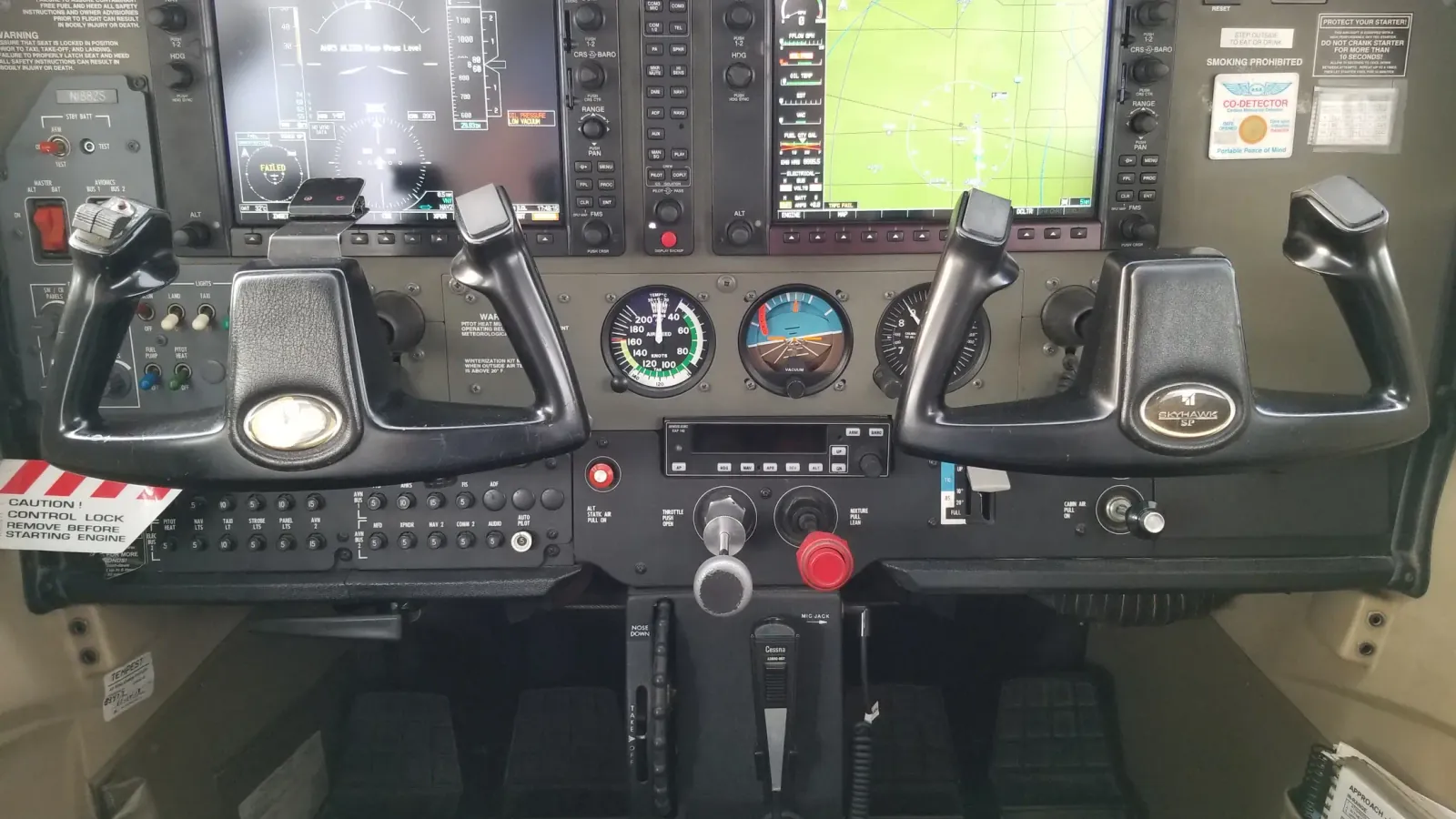
A regulation-grounded roadmap for an airplane instrument rating: eligibility, 50-hour cross-country and 40-hour instrument requirements, CFII training, IFR cross-country, knowledge test, and checkride preparation.
Short answer
An airplane instrument-rating applicant generally needs a Private Pilot certificate, 50 hours of cross-country PIC time including 10 in airplanes, 40 hours of actual or simulated instrument time, 15 hours of instrument instruction from an authorized instrument-airplane instructor, the required 250-nautical-mile IFR cross-country, knowledge preparation and endorsements, and a successful practical test. Exact credit and device rules should be checked against current § 61.65 and the applicant’s logbook.
Eligibility and experience at a glance
| Requirement | Airplane rating planning summary |
|---|---|
| Pilot certificate | Hold at least a current Private Pilot certificate, or apply concurrently, with the appropriate rating |
| Cross-country PIC | 50 hours total, including at least 10 hours in airplanes |
| Instrument time | 40 hours actual or simulated, subject to instructor, safety-pilot, and device rules |
| Instrument instruction | At least 15 hours from an authorized instrument-airplane instructor |
| IFR cross-country | At least 250 nautical miles along airways or ATC-directed routing, approaches at three airports, and three different kinds of approaches |
| Recent preparation | Three hours of instrument training from an authorized instructor within the two calendar months before the practical test |
Start with a logbook audit
Separate cross-country PIC from total cross-country, and separate actual instrument, simulated instrument, instrument instruction, and approved-device time. Confirm that safety-pilot operations and logbook entries were conducted correctly. A clean audit prevents discovering a shortage just before the practical test.
The audit also shapes cost. A pilot with the required cross-country PIC time and strong avionics experience has a different path from one who must build both experience and instrument proficiency. The cost planner shows why fixed package claims are often misleading.
A four-stage training roadmap
- Instrument control and systems: scan, trim, standard rates, avionics sources, failures, and unusual attitudes.
- Procedures: clearances, departures, intercepting and tracking, holds, approach setup, and missed approaches.
- Complete IFR operations: weather, alternates, filing, ATC, cross-country decisions, multiple airports, and abnormal events.
- ACS-level integration: eligibility review, knowledge remediation, scenario-based oral preparation, and repeatable flight performance.
The rating is more than approach repetition
Approaches are visible and easy to count, but real instrument utility comes from the decisions before and between them: weather interpretation, fuel and alternate planning, clearances, departures, routing changes, equipment status, missed approaches, and diversions. A pilot who can fly a precise final approach but cannot manage a changed clearance is not ready for single-pilot IFR.
The guide to what instrument training is actually like in Los Angeles describes how those layers are introduced from Van Nuys without turning every lesson into unmanaged complexity.
Ground school and knowledge-test timing
Complete the core ground course early enough that flight lessons apply known concepts. Do not wait until checkride preparation to learn weather products, alternate rules, lost-communications principles, aircraft systems, or instrument procedures. The knowledge test is one milestone; the oral evaluates whether you can apply the knowledge to a flight.
Checkride readiness
Fly With Robbie provides one-on-one CFII instruction at Van Nuys for pilots beginning the rating, continuing from another instructor, training in a suitable owner aircraft, or returning to instrument proficiency.
- All § 61.65 experience is documented and independently checked.
- Knowledge-test deficiencies have been taught and applied in scenarios.
- The pilot can brief, fly, and miss an approach without instructor prompting.
- Avionics and autopilot modes are predicted and verified rather than guessed.
- Partial-panel and abnormal events do not erase aircraft control or decision-making.
- Weather and alternate decisions remain conservative when the scenario adds pressure.
Frequently asked questions
Questions pilots ask about this topic
Do I need 50 cross-country hours before starting instrument training?
No. You may begin training earlier, but the required cross-country PIC experience must be satisfied for the rating. An early logbook review helps combine proficiency training and experience building efficiently.
Can simulator time count?
Eligible time in an approved simulator or training device may count within regulatory limits and operating conditions. Confirm the device authorization, instructor requirements, tasks, and logbook entry.
How long does an instrument rating take?
It depends on starting experience, lesson frequency, ground preparation, weather, aircraft availability, and proficiency. A logbook audit and baseline lesson provide a better answer than a fixed number of weeks.
Primary references
Verify the controlling information
Regulations, procedures, avionics, weather, and airport information can change. Use the current official source for an actual flight or certification decision.