 02
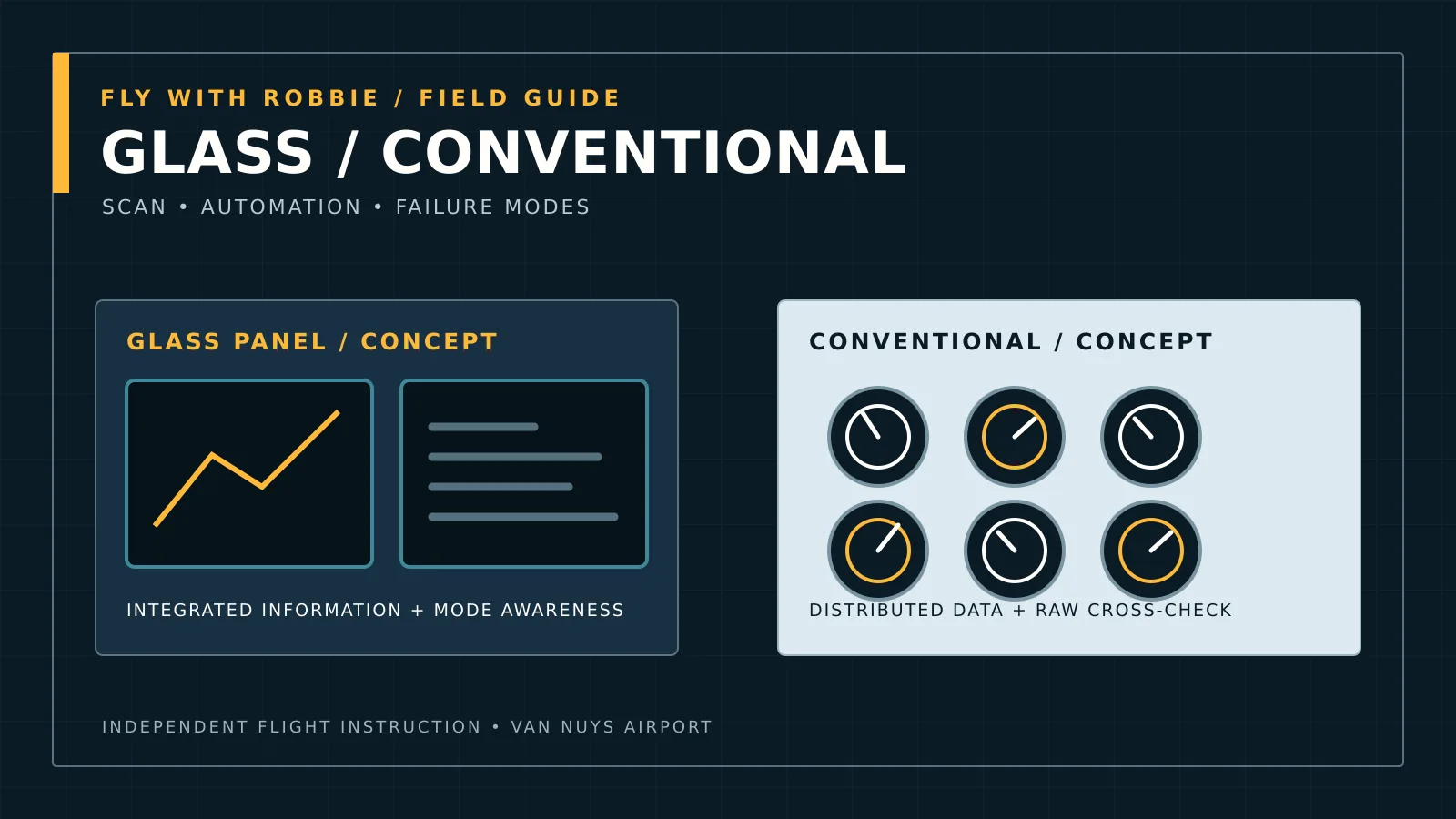
02G1000 vs Conventional Instruments for Flight Training
A practical comparison of G1000, traditional six-pack, and hybrid panels for primary, instrument, transition, and aircraft-owner training—without declaring one universally better.
Open guide →Independent CFI / CFII at Van Nuys AirportInstruction from $70/hr
(213) 787-7175Flight training knowledge base
Practical, source-linked guidance from an independent CFI/CFII for students and pilots training at Van Nuys and across Southern California.
Cornerstone resources
Clear answers, planning tools, comparison tables, and current primary references for the questions pilots ask most often.
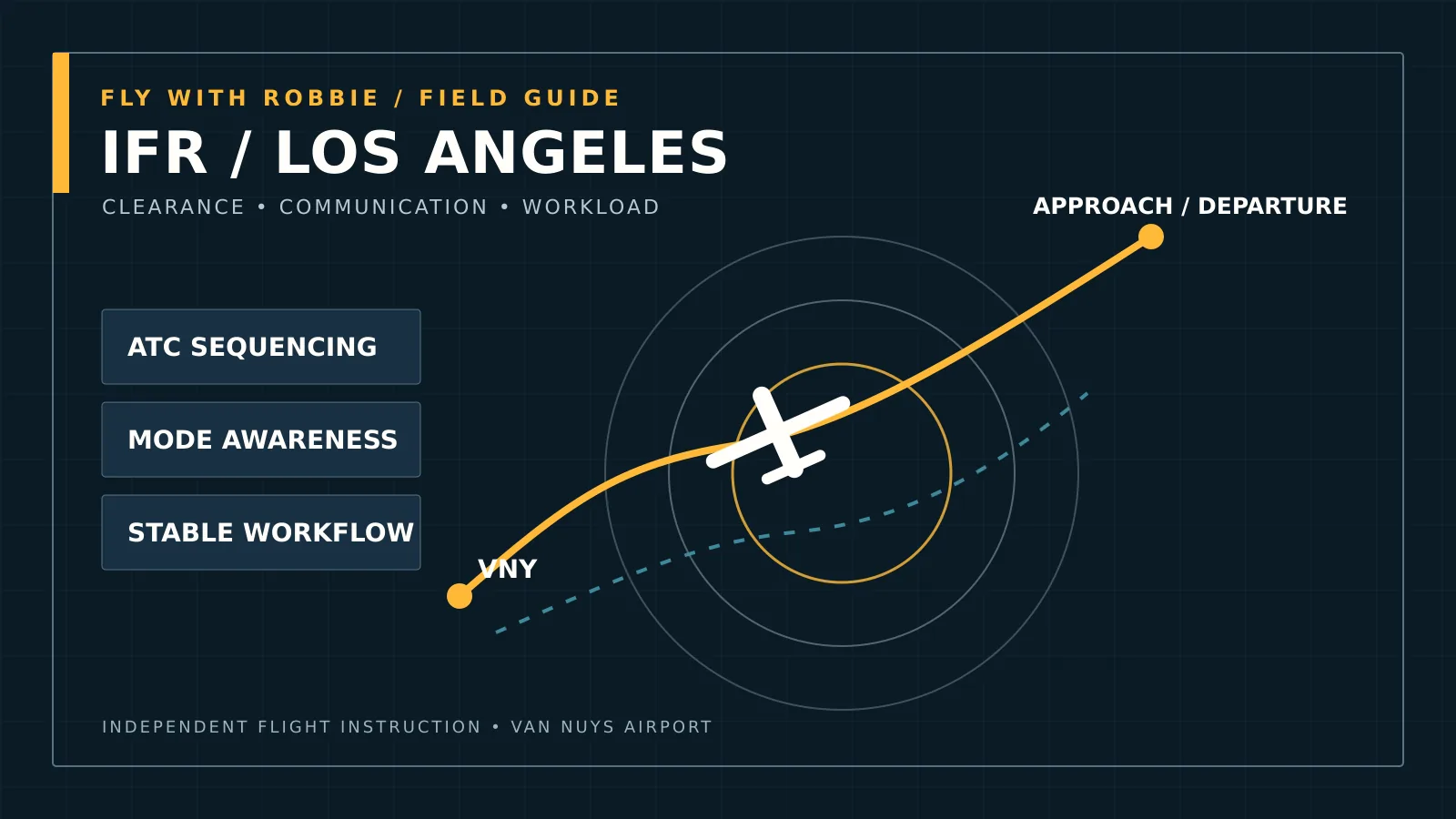
Instrument Training
A lesson-by-lesson guide to learning IFR from Van Nuys: busy ATC, approach variety, workload management, marine-layer weather, and the habits that make Los Angeles training transferable.
Open the guide →02A practical comparison of G1000, traditional six-pack, and hybrid panels for primary, instrument, transition, and aircraft-owner training—without declaring one universally better.
Open guide →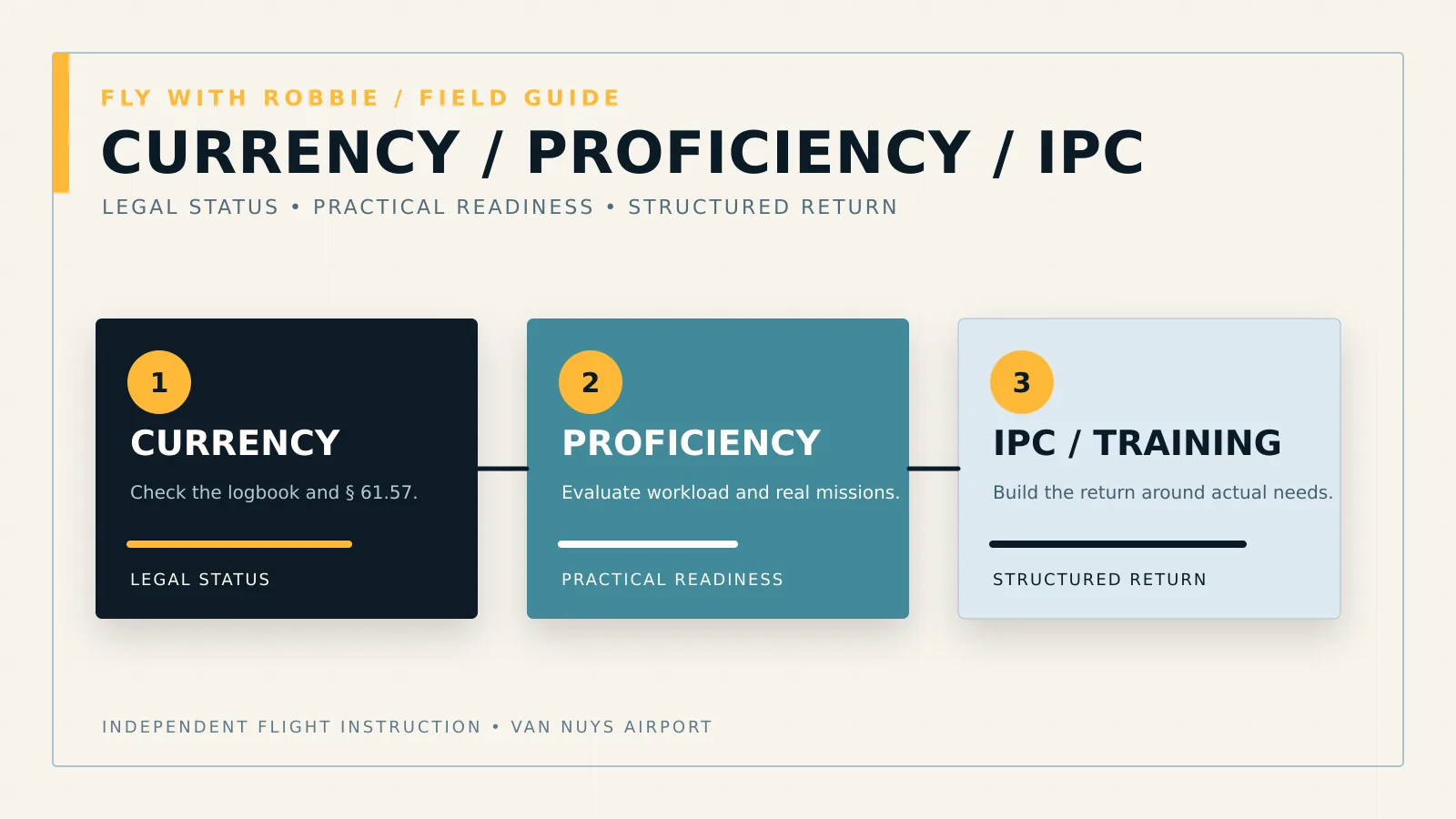 03
03A practical decision guide for instrument-rated pilots: the six-calendar-month currency rule, the second six-month window, IPC requirements, proficiency scenarios, and a return-to-IFR plan.
Open guide →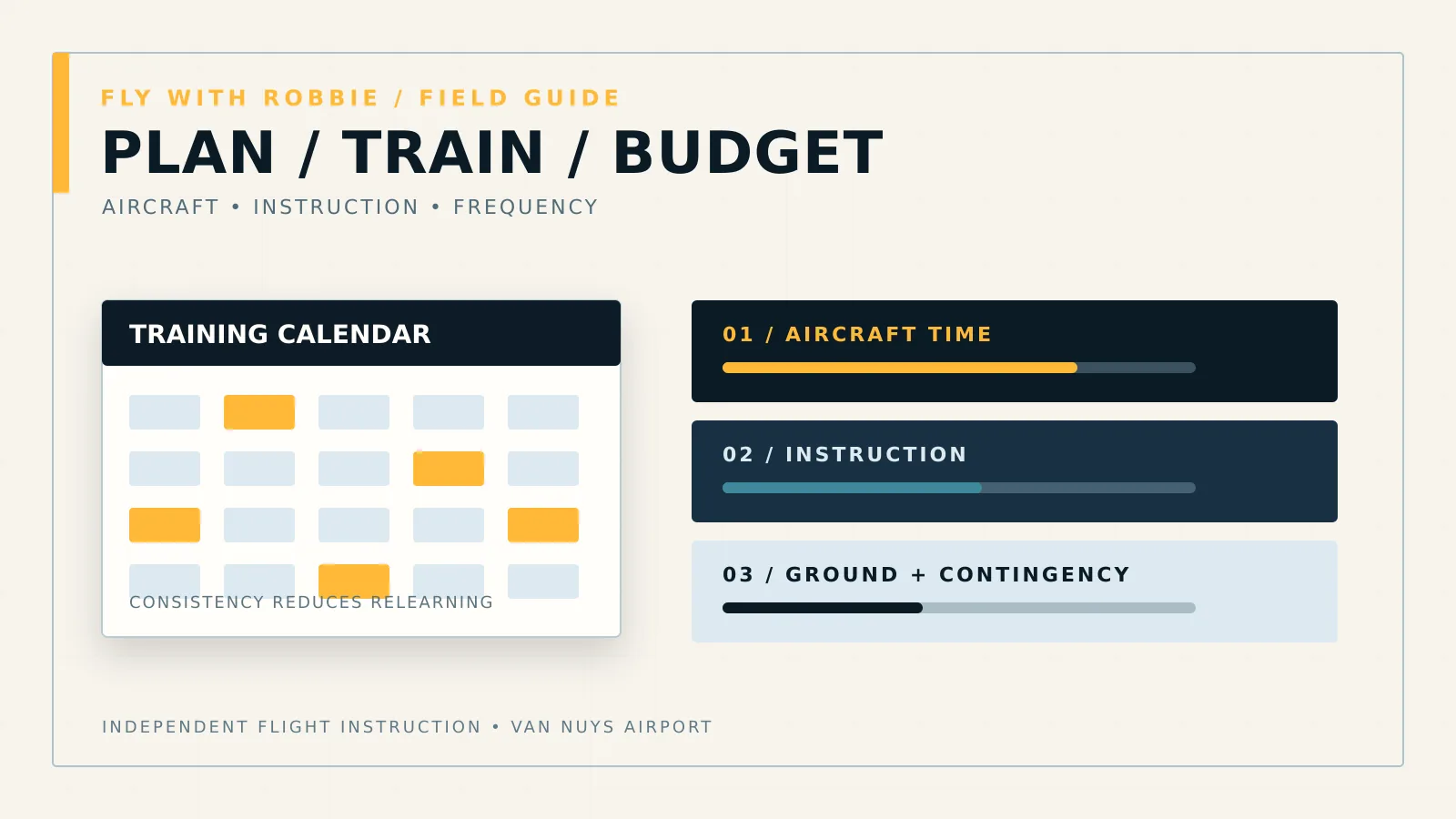 04
04Build a realistic Los Angeles flight-training budget using current instruction and aircraft rates, sample Private, Instrument, Sport, flight-review, and IPC scenarios, and a reusable worksheet.
Open guide →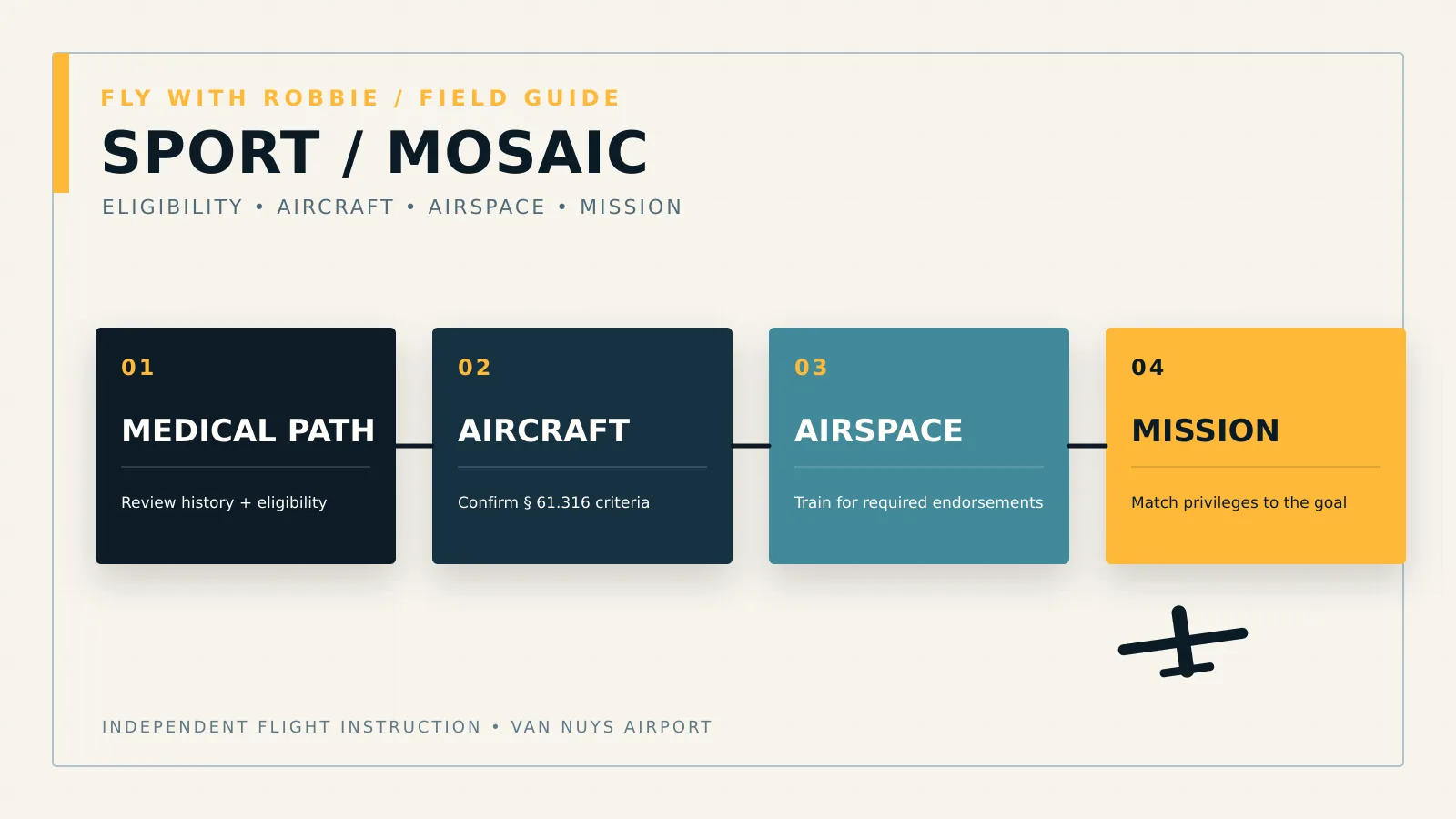 05
05A current, source-linked guide to Sport Pilot training at Van Nuys after MOSAIC: driver-license medical eligibility, aircraft limits, Class D endorsements, training hours, night privileges, and progression options.
Open guide →Topic clusters
Service pages remain the place to plan instruction. These guides explain the decisions, requirements, equipment, and training environment behind that instruction.
01
The FAA’s revised takeoff-minimums format separates obstacle types, adds DER crossing heights, and gives IFR pilots clearer departure-planning options.
→Cornerstone guideWhat Instrument Training Is Actually Like in Los Angeles AirspaceA lesson-by-lesson guide to learning IFR from Van Nuys: busy ATC, approach variety, workload management, marine-layer weather, and the habits that make Los Angeles training transferable.
→Cornerstone guideIFR Currency vs IFR Proficiency vs an IPCA practical decision guide for instrument-rated pilots: the six-calendar-month currency rule, the second six-month window, IPC requirements, proficiency scenarios, and a return-to-IFR plan.
→Instrument TrainingInstrument Rating Requirements and Training RoadmapA regulation-grounded roadmap for an airplane instrument rating: eligibility, 50-hour cross-country and 40-hour instrument requirements, CFII training, IFR cross-country, knowledge test, and checkride preparation.
→02
Twelve practical decisions that affect progress, cost, and safety before a first lesson—from certificate choice and medical timing to lesson frequency, ground school, aircraft, and instructor fit.
→Private PilotWhy Student Pilots Struggle With Landings—and How to Diagnose ItA cause-and-effect landing diagnostic for unstable approaches, airspeed, sight picture, flare timing, centerline control, crosswinds, bouncing, and productive debriefs.
→Private PilotFirst Solo Flight Requirements: What Readiness Actually Looks LikeThe FAA requirements, endorsements, pre-solo knowledge test, flight proficiency, weather and airport limits, and instructor judgment behind a safe first solo.
→Private PilotHow to Earn a Private Pilot Certificate in Los AngelesA practical Los Angeles roadmap from eligibility and medical planning through ground school, solo, cross-country training, knowledge test, checkride preparation, and realistic scheduling.
→03
04
A practical comparison of G1000, traditional six-pack, and hybrid panels for primary, instrument, transition, and aircraft-owner training—without declaring one universally better.
→Aircraft & AvionicsForeFlight for Student Pilots: A Stage-by-Stage Training GuideHow to introduce ForeFlight without weakening fundamentals: weather, charts, airport data, cross-country planning, cockpit setup, ownship discipline, logbook use, and failure planning.
→05
Build a realistic Los Angeles flight-training budget using current instruction and aircraft rates, sample Private, Instrument, Sport, flight-review, and IPC scenarios, and a reusable worksheet.
→Los Angeles FlyingUnderstanding the Airspace Around Van Nuys AirportA student-focused planning guide to Van Nuys Class D, the overlying Burbank Class C, parallel runways, radio workload, local orientation, practice-area departures, and current-source discipline.
→Los Angeles FlyingScenario-Based Flight Training in Los AngelesHow realistic Southern California missions build judgment without replacing maneuver standards: weather changes, reroutes, passengers, terrain, equipment failures, and practical-test preparation.
→Ready to apply it?
A question the guides did not answer?
Share your certificate, experience, aircraft, and goal. Text or email is the best way to discuss a practical next step.